Tuesday, 31 January 2017

Levit - Beethoven, 30 January 2017


Wigmore Hall


Piano Sonata no.2 in A major, op.2 no.2
Piano Sonata no.7 in D major, op.10 no.3
Piano Sonata no.6 in F major, op.10 no.2
Piano Sonata no.18 in E-flat major, op.31 no.3

Igor Levit (piano)


I found myself torn. Should I actually have been attending the march to Downing Street against Donald Trump and his enabler, Theresa May? There is more than one way to resist, though: of that I am certain. Listen, for instance, to Furtwängler’s wartime recordings. (I have just been listening, on Schubert’s birthday, to the 1942 Great C major Symphony. The anger is still more palpable in Beethoven Ninth’s from the same year. And so, of course, is the power of Beethoven’s music to resist.) And whilst all great art, all great human endeavour, will have something to offer in that respect, Beethoven lays claim to a very special place. Sceptics can rail all they like, try to cut his music down to size, deny Beethoven’s art its heroism; they will never succeed. We know that a performance of Fidelio from Daniel Barenboim and young musicians, many of whom would now be denied entry to the United States, has something very important to tell us. Just as we know that Beethoven from the Palestine Youth Orchestra, two of its members cruelly denied ‘permission’ by an enthusiastic Trump ally to leave Gaza, will speak of a musical necessity of which we can barely conceive, yet in a sense need just as keenly. To hear Beethoven piano sonatas, then, from an artist whose steadfast opposition to fascism (click here, for instance, for his statement to a Brussels audience following Trump’s election) is not the least admirable of his humanist qualities, and to engage with that performance as an audience member in, I hope, an active rather than a passive sense, had its merits too.
 

We began in the eighteenth century, with the second of the thirty-two sonatas, the A major, op.2 no.2. The opening phrase sounded fresh, still, just about, of that world; the answering phrase already showed Beethoven flexing his muscles in the direction of things to come. Great care over articulation and phrasing contributed to the urgency of the performance: nothing was rushed; everything counted. Accents and sforzandi mattered in a sense far beyond ‘mere’ expression: their structural function and thus their meaning too seemed almost to speak of a world we might have thought opened up by Webern and his successors. The first movement’s development section offered proper intensification, as if taking after the symphonic Beethoven still to come, and the recapitulation proved as much a second development as a return, motivic working key here. That said, proportions still spoke, quite rightly, of Classical perfection. (A question I often set first-year undergraduates relates to whether we should consider Beethoven to be a Classical or a Romantic composer. The longer I think about it, the more difficult, yet necessary, a question it is. Should it prove to be question to which just a few of them return throughout their lives, that would make me happy indeed.) With hushed dignity, the Largo appassionato was constructed before our ears. Architecture came to the fore, without compromise to the quasi-vocal ornamentalism so typical of much early Beethoven. Alas, it took the most full-blooded tone for Igor Levit to mask, if only briefly, an all too zealous contribution from quadrophonic bronchial activists. The Scherzo was characterised by graceful insouciance, as if trying to recapture a Mozartian world that would ever remain just beyond it, tantalisingly so. Its trio, both in legato and vivid drama, seems also to speak of Mozart. If I have heard the finale more overtly loved – often loved to death, I fear – this performance intrigued in laying bare Beethoven’s musical processes. Not that it was short on drama, far from it, but it showed, in modernistic fashion, that those processes are not only its motor but perhaps even, at least in part, its subject matter. Tonal surprises registered, if anything, all the more strongly.
 

At the opening of the D major Sonata, op.10 no.2, we heard a related, yet unquestionably different, tonality. One might say the same of much else too, of course, but it was that indefinable ‘character’ of key – even if Beethoven might use D major differently somewhere else – that immediately struck me. A dizzying array of themes was thoroughly integrated in a performance that knew exactly where it was heading. It was very fast – Beethoven marks its ‘Presto’, after all – yet never too fast, never breathless. Rockets soared, especially in the development, yet their trail never lacked grace. Again, the sheer difference of the recapitulation registered strongly, thrillingly. There was no mistaking, even from the first bar, the Romantic gravity of the slow movement, quite distinct from anything we had yet heard; and yet, that vocal, quasi-operatic quality remained to be heard too, transformed, even transfigured. Imbued with a meaning that could never be reduced to words, Levit showed us that, if all Beethoven matters enormously, some matters still more. Even the starkest dynamic contrasts could not disrupt the musico-dramatic line; they strengthened it: perhaps there is a message there for us beyond the concert hall too. After that, the Menuetto sounded with charm; disruptions, or apparent disruptions, in the bass, showed a different variety of charm and more than a little Beethovenian humour. Both quizzical and furious, the finale burst forth as a riot of Haydnesque invention that could never have been written by Haydn. Beethoven had learned his lessons far too well to be mistaken for another. The particular integrative impulse was very much Beethoven’s own – and, of course, that of the pianist.
 

The first movement of op.10 no.2, in F major, sounded initially not so distant from it’s a major counterpart in approach. The devil, or perhaps the angel, proved to be in the detail. Beethoven’s good nature shone through: more than good nature, profound humanity. Levit conveyed a fine sense of deep mystery to the development, which proved ‘surprising’, even if one flattered oneself one knew it. There was protean mystery to the central Allegretto too. Heard as if in a single breath, it revealed such an array of incident when one truly listened – and how could one not? The Presto finale was despatched with a virtuosity permitting of both fury and levity (no pun intended). Counterpoint was relished, proving generative of a well-nigh neo-Mozartian host of ‘characters’ plying their trade upon our aural stage.
 

With the E-flat major Sonata, op.31 no.3, we found ourselves in a very different world. What a work this is; how much more often we ought to hear it! The tonal centre emerged gracefully, yet not too easily, from that extraordinary first-movement introduction. (It is as much a joy to play as to hear!) And yet, despite the differences in scale, maturity, and so much else, there was again a sense of a host of characters treading the aural boards before us, Beethoven’s neo-Mozartian flirtations now at greater distance and perhaps even possessed of still greater affection. Rhythm, harmony, and melody formed an indissoluble whole, conveyed with exquisite voicing that yet never remotely seemed an end in itself. Above all, quite rightly, this was a drama. The second movement is, quite frankly, a bastard to play, but you would never have known it from this performance, in which lightness of touch and great boldness were revealed as two sides of the same coin. It was more boisterous than Mendelssohn but perhaps gestured more than a little in his direction. That sense of longing for an age to which Beethoven – perhaps all of us – would like to return, yet could not, imbued the third movement, played with tender luxuriance. All too often it is rushed, but not here, the richness of Beethoven’s harmonies present for all to hear. A skittish contrast was announced with the finale, whose mood changes proved just as protean as anything in the preceding sonata. It was every inch a finale, every inch a Beethoven finale: just what was required.


To quote Hans Werner Henze, in an article entitled 'Does Music have to be Political?': 'Beethoven regarded his whole enterprise as a contribution to human progress.' Let us do so too.


Wednesday, 25 January 2017

Aimard/Stefanovich - Brahms and Messiaen, 24 January 2017


St John’s, Smith Square

Brahms – Sonata in F minor for two pianos, op.34b
Messiaen – Visions de l’Amen

Pierre-Laurent Aimard, Tamara Stefanovich (pianos)
 
I am not sure that I had ever heard Brahms’s op.34 (the Piano Quintet, to most of us) in its earlier, but not earliest, two piano version. The first movement, in this intriguing, sometimes even provocative, performance from Tamara Stefanovich and Pierre-Laurent Aimard, emerged not so much monochrome as with a different, darker palette. This was certainly not ‘old school’ Brahms, if such a thing ever existed. (Perhaps it did, but if so, with an array of options, certainly not as a monolith.) The tone I heard from Aimard, to whom I was seated closest, perhaps came closest to a pianist such as the Maurizio Pollini of ten or fifteen years ago. The music, of course, sounded very different; if, ultimately, I could not quite bring myself to dissent from Clara Schumann’s thought, quoted in Joanna Wyld’s programme note, that it ‘had the impression of a transcribed work’, there is often much to be learned from transcriptions, and perhaps especially what we might call transcriptions avant la lettre. Counterpoint was often clarified, although differences in attack occasionally perplexed (my fault, not that of the performance, I am sure). A curious passage of near- (yet not quite) stasis in the development had me almost (yet not quite) think forward in the programme to Messiaen. And then, of course, we moved forward once again. A darkly Romantic recapitulation, offered a sense of chiaroscuro with cross-stage echoing of post-Mendelssohn leggierezza, offered much more to intrigue, even to confound.
 
Our pianists were in no danger of confusing sentiment and sentimentality in the slow movement. What initially, to untutored ears (mine included), might have sounded a little dour, revealed its riches both horizontally and vertically, clearly prefiguring Schoenberg. Motivic complexity bred harmonic motion, and vice versa. I was struck several times, as so often with Brahms, how certain turns of phrase, especially in conjunction with harmony, had much in common with Schubert. The performers’ sense of onward tread was not dissimilar to his music either. A surprising, rather winning sense of near-swing to the opening of the scherzo was soon confounded by muscular strength of rhythm. Rhythms, though, could equally be lightly sprung. There was no more humour here than there would be in a Chopin scherzo, yet Beethovenian provenance remained clear. At times, the music seemed to cry out for an orchestra (as Clara suggested).
 
The abruptness of the ending seemed to prepare, or perhaps defiantly not to prepare, the way for the sheer strangeness (Book of the Hanging Gardens-strangeness) of the introduction to the finale. Tonality was not dead yet, though, as the almost Mozartian profusion of material seemed determined, if not quite without equivocation, to demonstrate. This was Brahms of a Romantic-modernist hue such as we hear far too rarely. I am not sure I have ever heard his music sound quite so perplexing in its alienation. At times, the music might almost have been by Busoni. (Now there is a thought for repertoire these artists might tackle…)
 
With the opening bar of Messiaen’s Visions de l’Amen we heard music that sounded far more at ease with the piano(s): Liszt’s tradition, then, one might say, rather than Brahms’s. And indeed I struggle to think of anything that Messiaen and Brahms have in common: this was quite a contrast, and again a provocative one at that. A magical contrast between treble registers and bass registers was to be heard in this ‘Amen de la création’. All manner of thoughts and feelings relating to Creation theology suggested themselves, although I am sure one might equally listen to this as something approaching that ever chimerical ‘absolute music’, if for some reason one wished to. The interaction of rhythmic security and metrical subtlety seemed just as important to the music’s progress as its harmonies. Nevertheless, or perhaps even because of that, Messiaen’s Debussyan heritage – this is piano music, after all – loomed large. For a slow-burn crescendo, and for much else, this was difficult to beat. Mussorgskian bells (Boris Godunov) pealed, not without menace, or at least disquietude.

Mussorgsky’s ghost perhaps remained during the ensuing ‘Amen des étoiles, de la panète à l’anneau’. Scurrying figures reminded me on occasion of his Pictures at an Exhibition. Darkness of spirit was conveyed: angels are not merely, or even generally, ‘nice’. They, like the music and its performance, are ever inspiring, never predictable, awe-inspiring. Grey secularism could likewise not have stood further from the ensuing ‘Amen de l’agonie de Jésus’. Agony does not necessarily mean what the secular-minded think it does, not entirely anyway. Here there was ecstasy in radiant beauty, something lying quite beyond mere ‘pain’, indeed sublimely dissociated therefrom. Late Liszt hovered in the air at the close, above all in Aimard’s low, very low bass notes.

‘Amen du désir’ brought reminders of an earlier, more perfumed Messiaen, this celestial banquet yet also prefiguring certain aspects of Turangalîla, both for better and for worse. It nauseated; it more than skirted with the banal. But that was part of the point. By way of sharp contrast, the ‘Amen des anges, ses saints, du chant des oiseaux’ opened as if an antiphon were being intoned; in a sense, it is. It then went on its cheerful way, seemingly assured of its blessed nature, which again, one might say, in a sense, it is. The performance brought out the importance of contrasting material: as important, it seemed, as progress (I hesitate to say ‘development’) in time.

Majesty, not only in the ravishingly voiced chords, but also in their juxtaposition, characterised for me the sixth Amen, that of ‘jugement’. With the concluding, indeed consummating, ‘Amen de la consommation’, this church-cum-concert-hall was intoxicated, bewitched even, by a brew of ecstatic triumph and something apocalyptic (Stefanovich), which seemed both to underlie and to undermine. Virtuosic piano tradition was here relished – and yet the music was clearly concerned with matters that would have bewildered most other pianist-composers, with the possible exception of Liszt, in that tradition or those traditions. Extraordinary!


Tuesday, 24 January 2017

Letter to my MP, Jim Fitzpatrick, concerning the European Union and a Parliamentary vote to leave


Dear Jim,


May I add my voice to what I suspect and certainly hope will be the throng of constituents urging you to oppose whatever legislation the Government might bring forward to further the country’s departure from the European Union? I am partly inclined to leave it at that, since you must have heard all the arguments before, yet feel that such would be an act of laziness, shading into cowardice, so please humour me.


To those who speak disingenuously of ‘defying the will of the people’, there are so many responses that it is difficult to know where to start. One might do so by pointing to those prevented from voting, by age or by nationality. One might also point out that this is a parliamentary democracy; not only is it impossible for a referendum to be anything other than advisory, but its advisory nature was explicitly conceded by the Government. There is also, of course, the little matter of the Supreme Court judgement. It is, though, simply absurd for anyone to claim to restore parliamentary sovereignty – not that it ever needed restoring – by circumventing it. There may very well be good reasons to adopt another system, but that is an entirely different matter. Moreover, a crude, slender majority of an electorate, even if it were less gerrymandered than this, has never been considered to offer a mandate for major constitutional change. In any case, the will of all, as Rousseau would tell us, is quite different from the general will.


Perhaps more fundamentally, still more personally, our future is being stolen from us: stolen by ignorant, xenophobic, often downright racist people, a great number of them of an age to suggest that theirs is an existentialistic act of revenge upon generations who have already been many times cursed by their social vandalism. Most of us have no hope whatsoever, especially in London, of owning property. Our financial prospects are bleak, and will be far bleaker in the bargain basement ultra-neo-liberal order the Conservatives have in mind. We shall never be able to retire; we fear the loss of our National Health Service; we worry about being dismissed at will on the basis of gender, race, sexuality, or any other prejudiced whim. The European Union has often been our only hope against the ravages of Thatcherism and its successors. It is far from perfect, and is in great need of reform, but its neo-liberalism is at least considerably removed from that of the Conservative Party.


We are Europeans. We do not see free movement as something to be tolerated, still less attacked. It is for us a blessing to have the right, as European citizens, to live, to work, to study alongside our European brothers and sisters. For many of us, it is our keenest of dreams to do so. We likewise welcome those brothers and sisters with open arms to our shores, and we abhor the vicious, even deadly, attacks upon them by racists. The people to whom this is happening are not an abstraction. They are our friends, our neighbours, our lovers; they are those we pass on the street or sit next to on the Tube; they are our fellow citizens, of Europe and of the world. We care about them and treat any attack on them as an attack upon ourselves. We have no wish to compel those who do not wish to make use of their privileges to live elsewhere to do so; all we ask is that they do not, out of spiteful malice, prevent us from living our lives.


In an increasingly dangerous world, with an outright fascist government now ruling the United States, now more than ever is the time for European solidarity. That need not, should not, betoken insularity, yet it will enable us to help other countries in greater need than our own. Cast outside the European Union, we shall matter to no one; we shall be quite incapable of influencing the EU’s decisions concerning ourselves and the rest of the world. That is not, as some would have it, to ‘do Britain down’ – the very phrase, incidentally, displays a chilling indifference to Ireland – but to attempt to elevate her, so as to play a full role in the world of today, rather than engaging in repellent imperialist fantasies.


Above all, to oppose this would be the right thing to do. Our country, our continent, and, closer to home, our city, our borough, and our constituency depend on it. The alternative is catastrophe of a kind even the most pessimistic of us have not begun to imagine.


Please do what you can.


With best wishes,


Mark

Sunday, 22 January 2017

Lohengrin, Opéra national de Paris, 21 January 2017


Opéra Bastille

King Henry the Fowler – René Pape
Lohengrin – Jonas Kaufmann
Elsa – Martina Serafin
Friedrich von Telramund – Wolfgang Koch
Ortrud – Evelyn Herlitzius
King’s Herald – Egils Silins
Four Brabantian Nobles – Hyun-Jong Roh, Cyrille Lovighi, Laurent Laberdesque, Julien Joguet
Four Pages – Irina Kopylova, Corinne Talibart, Laetitia Jeanson, Lilla Farkas

Claus Guth (director)
Christian Schmidt (designs)
Olaf Winter (lighting)
Volker Michl (choreography)
Ronny Dietrich (dramaturgy)

Chorus of the Opéra national de Paris (chorus master: José Luis Basso)
Orchestra of the Opéra national de Paris
Philippe Jordan (conductor)


Claus Guth seems to me a frustratingly uneven director: much better than being a bad or mediocre director, of course, but even so. This Lohengrin, first seen at La Scala (although not by me) under Daniel Barenboim four years ago, now replaces Robert Carsen’s Paris production. I am afraid I was left bemused, even baffled, by much of what I saw. There is nothing especially objectionable to it – unlike, say, Guth’s Salzburg Fidelio, also starring Jonas Kaufmann – yet nor does it, for me at least, reach anything approaching the heights of Guth’s Salzburg Figaro (preserved on DVD) or his recent Berlin Salome. Sad to say, I found it rather dull, reliant entirely upon the music for any dramatic effect, although I did wonder whether there were a point I was missing.


As is fashionable, the staging is updated to the time of composition: the mid-nineteenth century, albeit with no obvious indication of the revolutionary upheavals in which Wagner so celebratedly immersed himself. Whoever this Lohengrin may be, he does not seem to be Bakunin, or Feuerbach. There is something insistently restorationist – whether post-1815 or post-1848/9 – to the impeccable dress uniform of King Henry. The costumes more generally, especially the women’s chorus black (why are they apparently in mourning at a wedding?), perhaps speak of the 1850s and social reaction, but I am not sure that it especially matters. Christian Schmidt, designer of both sets and costumes, certainly provides a handsome frame for the action (although something decidedly peculiar happens in the first half of the final act).  Is there something of the contemporary ‘absolute artist’ to whom Wagner referred with reference to this hero in particular? Perhaps. Lohengrin when he arrives, is in a somewhat ‘arty’ state of (relative) dishevelment, frilly shirt hanging out, waistcoat, yet no coat. There is a very nineteenth-century-looking upright piano on stage (upturned, presumably significantly, in the third act), but that seems to be more Elsa’s province than his. His arrival, suddenly revealed by the parting of the crowd, is very odd, foetal position adopted; indeed, his damaged progress throughout, at times unable to walk in even the most tentative of straight lines, seems to continue from that, although again, I cannot even really hazard a serious guess as to why. Great play is made of his archaic (earlier-century?) silver horn too.
 

The girl Elsa and her brother, Gottfried, appear on stage from time to time. Is she dreaming this? It seems unlikely: Lohengrin and Lohengrin are hardly the stuff of girls’ dreams. Is the woman recollecting something from her childhood, perhaps even feelings of incestuous love for her brother? Perhaps, but if so, it seemed very unclear to me, and had little obvious relationship to anything else we were seeing. The setting for the opening of the third act is an enlarged version of some fauna we have previously seen near the piano, in what had then seemed to be a palace courtyard. Now it has become a kitsch (I presume deliberately so) creation of Nature, replete with a pool in which Lohengrin, having taken his shoes and socks off (they were also off when he arrived), can walk around and delicately splash his bride. The colours resemble those of a woodland scene in which the photographic colour filters have been increased to eighty per cent or so. I presume it is some sort of dream sequence, at least in part, and that there is some sort of Freudian concept at work more broadly, but I am afraid to say that I remain largely at a loss.
 

The actual music, then, rather than the scattered musical hints onstage, was the thing. There was some occasional string scrappiness in the first act, but otherwise some wonderful orchestral playing, a rather unusual oboe sound (putting me in mind of Lothar Koch) notwithstanding. Gold rather than white was the colour that came to mind from the violins, but that was fine with me. Ebullient brass nevertheless managed to blend. Philippe Jordan mostly had the measure of the work’s structure. If he did not manage to build and convey neo-Furtwänglerian arcs in the way Daniel Barenboim does in this music, there is to a certain extent, and Jordan rarely overstepped this, a case for bringing to the fore the derivations (which Wagner admitted to Schumann, albeit concerning the libretto) from earlier operatic forms too.
 

Ears were of course focused on Kaufmann, not least given his recent illness. His opening phrase was unfortunate, almost grey in hue, but that, I think, was a consequence of the director’s placing him in that foetal position, on the ground, turned away from the audience. Maybe it was even part of the directorial Konzept, although it would have made more sense (to me, anyway) as Florestan. If he sounded a little careful at times, that was understandable, and there were no real grounds for complaint, even at the sternest level of criticism. The Grail Narration was where it all came together: rapt, indeed spellbinding, of delivery, as if searching for an answer not to be found (which, one might say, is very much part of what Lohengrin is doing here).
 

Martina Serafin’s Elsa was something of a trial when on trial. Squally and uncertain of intonation, she improved considerably in the second and third acts, convincing in her kindness to Ortrud. Evelyn Herlitzius’s account of that role was in the class of Waltraud Meier, perhaps vocally still wilder, although never unacceptably so. Her anger at the close was the stuff of nightmares – in the best sense. (What Guth had in mind of her visually here seemed more odd than anything else, slow-motion agony coming across more as ‘stagey’ than tragic.) René Pape’s Henry the Fowler was typically beautiful of tone, which is to say very beautiful indeed, lest that sound complacent or a faint compliment. Wolfgang Koch, Bayreuth’s recent Rheingold Wotan, gave a demonic performance of Telramund; he may ultimately have been led by Ortrud, but he was anything but a cipher, and clearly had his own inner battles to fight. Egils Silins impressed with clean, intelligent delivery as the King’s Herald, his tone of no little beauty too. Choral singing, of great importance to this opera, was mostly excellent, indeed pretty much entirely so following some occasional, quite forgivable slips in the first act. José Luis Basso is clearly doing a good job in training his Paris chorus.
 

Well worth hearing then, perhaps even seeing. You might even be able to explain what you see to me.


Friday, 20 January 2017

Written on Skin, Royal Opera, 18 January 2017


Royal Opera House

Agnès – Barbara Hannigan
Protector – acted by Christopher Purves, sung by James Cleverton
First Angel/Boy – Iestyn Davies
Second Angel/Marie – Victoria Simmonds
Third Angel/John – Mark Padmore

Katie Mitchell (director)
Vicki Mortimer (designs)
Jon Clark (lighting)

Orchestra of the Royal Opera House
George Benjamin (conductor)

I hope that you will forgive me for offering this just as a diary item, certainly not as a proper review. I have been very busy this month and continue to be, and was also quite jet lagged on this occasion, so was not nearly so alert as I might have been There were things I might have added to my reviews both of the previous outing of this Royal Opera production and the recent outstanding concert performance at the Barbican, both conducted by the composer. It remains a masterpiece, though, and I hope my earlier thoughts (linked to above) might be of interest to some of you. Lohengrin, the one 'canonical' Wagner opera I did not see in 2016, will come tomorrow, with one Jonas Kaufmann in the title role...


Sunday, 15 January 2017

Le grand macabre, LSO/Rattle, 14 January 2017


Barbican Hall

Pieter Bruegel the Elder: The Triumph of Death
 

Piet the Pot – Peter Hoare
Amando – Ronnita Miller
Amanda – Elizabeth Watts
Nekrotzar – Pavlo Hunka
Astradamors – Frode Olsen
Mescalina – Heidi Melton
Venus, Gepopo – Audrey Luna
Prince Go-Go – Anthony Roth Costanzo
White Minister – Peter Tantsits
Black Minister – Joshua Bloom
Ruffiack – Christian Valle
Schobiak – Fabian Langguth
Schabernack – Benson Wilson
 

Peter Sellars (director)
Hans-Georg Lenhart (assistant director)
Ben Zamora (lighting)
Michelle Bradbury (costumes)
Nick Hillel (video)

London Symphony Chorus (chorus master: Simon Halsey)
London Symphony Orchestra
Simon Rattle (conductor)

Gepopo (Audrey Luna); Simon Rattle conducting the LSO
Production images: John Phillips/Getty Images


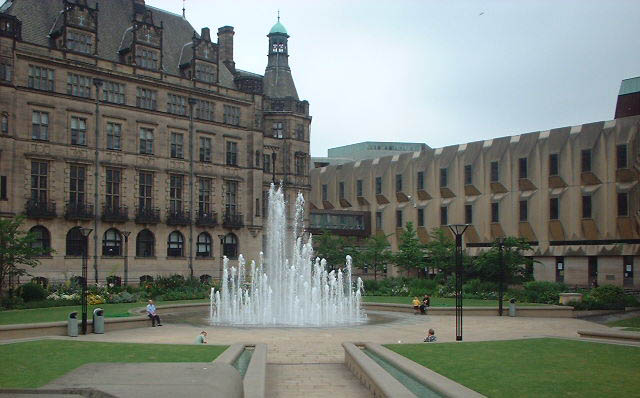
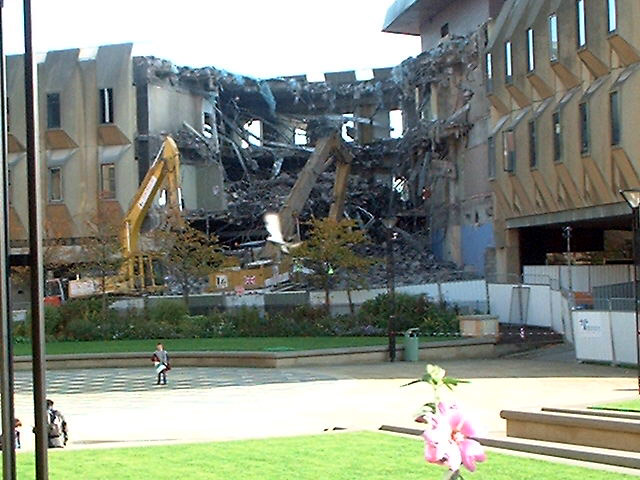
Breughelland is never far away. It certainly was not in the 1970s, when Ligeti composed the first version of his opera. For many of us, though, it has rarely felt closer, or at least not for a long time. A friend, Antonio Orlando, whom I met in the interval, mentioned the BBC film Threads, and we shared our experiences of something which, seen at our respective schools, changed us forever. Seeing it in the early 1990s, nuclear war became a far more terrifying, far more real prospect, even though its likelihood may well have been receding. It felt all the closer to home to this South Yorkshire schoolboy, since its harrowing portrayal of nuclear holocaust was set in Sheffield, amongst buildings – and their rubble – which he knew rather well: for instance, the ‘Egg Box’ Town Hall extension, which, I now learn, has long since been torn down in a typically English fit of anti-modernist philistinism. Now the United Kingdom has its first Prime Minister to have declared openly that she would use nuclear weapons, and the world – well, the world has Donald Trump.


Such thoughts would seem, not unreasonably, to have been on Peter Sellars’s mind when coming up with his concert staging of Le grand macabre. What we lose in sheer madcap surrealism – highly relatively speaking – we gain in contemporary immediacy: swings and roundabouts. In any case, there is nothing more blackly surreal than the mad idea of MAD (Mutually Assured Destruction), which one still hears from time to time from Internet and, alas, real-life sociopaths such as [complete according to political taste]. And so, the first two scenes take place at a nuclear conference in London and Berlin (the two venues of staging); having it relate to ‘clean’ nuclear energy brings a frightening, post-Chernobyl, pre-Hinkley Point C twist of its own. If the world, that of Breughelland and our own, needs an Angela Merkel, she is not even slightly evident here, as we flounder and err in identifiably post-Dr Strangelove territory. Excellent video imagery from Nick Hillel portrays the self-congratulatory world of our political leaders, plots the history of nuclear testing and worse, closes in on the devastation of the post-apocalypse. The congress of Astradamors and Mescalina takes place entirely online, despite their seating next to each other (very much of our virtual age). We make connections as we will, each of us different, but there is much to set our teeth into. I was less sure about the separation of Amando and Amanda, but perhaps I was missing something.
Peter Tantsits (White Minister), Joshua Bloom (Black Minister), Prince Go-Go (Anthony Roth Costanzo)


At the heart, of course, is the LSO, on world-class form here under its Music Director Designate, Simon Rattle. Whatever the vagaries of many of Rattle’s recent performances of Classical and Romantic repertoire, he has always been in his element in complex modernist and contemporary scores. So it was here, his orchestra-to-be fearless in its precision, sardonic in its wit, and not without tenderness when suggested (although how seriously should one take it?) Excellent though the ENO performance I saw and heard seven years ago may have been, this seemed to me in quite a different league. (Perhaps it was just a matter of my greater receptivity; my memory is not so sharp to be able to know for certain.) The orchestra, with a nod to music theatre, is dressed so as to suggest that its members are conference delegates. Its role as commentator, even as satirical Greek Chorus, is thereby heightened, whilst that of the actual chorus, joining us in the hall itself rather than on the stage, has us identify with its plight – just, one might say, as in Threads.


And at the heart of that heart, as it were, is Ligeti’s extraordinary score. Not unlike the brutalism of the surrounding Barbican Estate, which seems to become the more magnificent as it ages, or, if one will, is classicised, the music’s contemporaneous inventiveness becomes, like that of a reborn Haydn, all the more revealing upon closer acquaintance. This felt like a masterclass in informing us that the late 70s and early 80s saw the flourishing of all forms of resistance to neo-liberalism as well as the tightening of its iron grip from which we, frightened as well as hopeful, are only just beginning to liberate ourselves. A combination of instruments here, a turn of phrase there, a suggestion concerning what might be absent as well as what might be present: all these and so much more create allusions to a whole history not just of opera (Monteverdi onwards) but symphonic and other music(s) too. Ligetian parody, for instance in the ‘Collage’ with which Nekrotzar (The Donald? Or the force behind him? Or is that to look for the Wizard of Oz?) makes his entry, has a heart and a musical impetus of its own. There, the Eroica bass line’s treatment subverts a Beethovenian message that perhaps can no longer be ours, much as we need it; yet, at the same time, the dancing upon its ruins, the effort once again to construct, perhaps offers the hope of renascent humanity. And yet, the brilliantly hollow ‘moral’ – surely a homage to Don Giovanni and The Rake’s Progress – ensures that the Ligeti whose family had been lost in Auschwitz or, in his mother’s case, had survived it, has the last and darkest laugh of all.


Piet the Pot (Peter Hoare) and Astradorms (Frode Olsen) sit on a bed and Prince Go-Go (Anthony Roth Costanza) hides underneath it, whilst Nekrotzar (Pavlo Hunka) stands at the camera, about to usher in the apocalypse.


To praise thosee vocal performances deserving of praise would be to write out once again the cast list – not, of course, to forget the outstanding London Symphony Chorus. Peter Hoare’s abilities as singer and actor proved triumphant once again, as Piet the Pot. Whatever my doubts concerning Sellars’s portrayal of them, the duo of Elizabeth Watts and Ronnita Miller made for formidable music-making, their voices contrasted in colour yet more than capable of blend. Pavlo Hunka’s Nekrotzar was blackly bureaucratic, if that makes any sense (one might perhaps ask that of the opera itself in similar vein!) There was something that seemed both to go to the heart of the character, and yet also to show that there is no heart – and not only in a sentimental sense. Audrey Luna’s coloratura proved properly stage-stopping. I was also very much taken with the depth of tone and sheer sassiness of character to Heidi Melton’s Mescalina. Peter Tantsists, as the White Minister, revealed a finely honed tenor new to me; I hope to hear more. Last but certainly not least, Anthony Roth Costanza’s Prince Go-Go proved almost painfully beautiful of counter-tenor tone, the unearthliness tempered from time to time by something suggestive of more temporal (quite appropriately) concerns. If ever, though, a cast, indeed a performance and a production too, were more than the sum of its parts, it would be this. Shall we now enjoy the end times?


Saturday, 14 January 2017

LSO Chamber Orchestra/Antonini - JS Bach, WF Bach, CPE Bach, Telemann, Haydn, 13 January 2017


Milton Court Concert Hall

JS Bach – Orchestral Suite no.1 in C major, BWV 1066
WF Bach – Symphony in F major, F 67
CPE Bach – Symphony in G major, Wq 182/1
Telemann – Recorder Concerto in C major, TWV 51
Haydn – Symphony no.49, La Passione

LSO Chamber Orchestra
Giovanni Antonini (recorder, conductor)


It is a rare delight to hear the LSO, even if in ‘chamber orchestral’ formation, play music from the first half of the eighteenth century. Since the death of Colin Davis, it has even been something of a rare delight to hear the orchestra in eighteenth-century music at all. (I suppose we should at least be grateful to have been spared ‘Gergiev’s Haydn’.) Moving across the road from the Barbican to Milton Court was, in such circumstances, a sensible move; it certainly ensured that a small orchestra did not sound too small. The one problem, and I am afraid it was at times well-nigh insurmountable, was the conductor, Giovanni Antonini. Frankly, the LSO – and we – deserved better.


I kept an open mind for as long as I could. If, for these ears, trained on Klemperer and Richter, the introduction to the first movement of Bach’s C major Orchestral Suite sounded light, airy, and, alas, all too short-breathed, perhaps there would be a way of challenging those ears to listen differently, to take the performance on its own terms. The problem, despite the break-neck speed that ensued, was less of tempo as such, then of the lack of space for the music to breathe. Gorgeous, bubbly, woodwind playing offered some compensation, though. A courtly, undeniably Gallic Courante fared better, as did a surprisingly vigorous first Gavotte, its companion quite the textural contrast. Counterpoint was admirably clear. Alas, Antonini conducted with all the musical awareness of a sewing machine. The Forlane impressed with its vigour too, although greater warmth from the strings – low, but thankfully not no, vibrato – would have been welcome. The Minuets had a reasonable sense of character; the Bourrées were excitable, closer to Vivaldi (!) than to Bach; the Passepieds were suavely enough despatched. I listened in vain, however, for Antonini to show the slightest awareness of harmonic rhythm; and without that, Bach is lost.
 

The F major Symphony by Wilhelm Friedemann Bach is more of a rarity, and thus scored points on that alone. Its first and third movements were performed with a sense of the strangeness of their disjuctures, yet Antonini seemed incapable, or at least unwilling, to mould a series of rhetorical gestures into something greater than the sum of their parts. Nervously dramatic playing again offered some compensation. The intervening Andante really needed more space, less metronomic regularity, although the LSO strings sounded impressively dark. An air of galanterie was welcome in the closing pair of Menuets, but Antonini needed to dig more into the music, the prevailing impression being one of curious neutrality – as if the players were being prevented from playing.
 

CPE Bach’s G major Symphony, Wq 182/1 concluded the first half. The opening Allegro di molto offered greater continuity: that is partly the work itself, but was not, I think, just the work. The seeds of something Mozartian were to be heard, if one so wished – a turn of phrase, a harmonic progression – without compromise to this most individual of musical voices. The slow movement emerged stylistically similar – too much so? – with Antonini again far too static in his conception. A finale somewhere in between again had me wishing that he might take more account – some account – of harmony and its role in propelling the action. This is, after all, the composer who declared that his ‘and my deceased father’s basic principles are contrary to Rameau’s’; we need to think about what that might mean.
 

The C major Recorder Concerto by Telemann, TWV 51, is no masterpiece. It, however, received perhaps the most compelling performance of the evening, at least until the interminable finale. One was better advised to close one’s eyes, though, unless one wished to follow the lead of many audience members, attempting, some with greater success than others, to stifle the giggles. Even before Antonini began to play, we were treated to bizarre dance movements; once connected with his instrument, the impression was of a cross between a snake charmer and something more pornographic. It was, I suppose, a spectacle of sorts. Poor Telemann seems increasingly to attract the bizarre: a couple of years or so ago, it was Simone Kermes in a state of perplexing ecstasy. There was alert, characterful playing, especially from the orchestra, which seemed to benefit from not being conducted. In the slow movement, having given a passable impression of a baby eagle not quite managing to take flight, Antonini concentrated on his playing, the LSO’s performance sounded all the more cultivated as a result. At one point, however, I felt it necessary to stare at an emergency exit sign. Solo playing became more wayward in the Andante, Antonini seemingly not listening to the orchestra, concentrating instead on his own peculiar self-choreography. The Lang Lang of the recorder? Perhaps, but with lesser technical ability. There was undeniable virtuosity, though, to the finale. It went on and on and on, though. Until then, I should have been happy to testify to a Telemann performance that had at least not bored me.
 

Seemingly emboldened by that display – and cheers from a small yet vocal group of partisans – Antonini continued to inflict ‘flamboyant’ gestures on the music, in this case that of Haydn. Quite unconnected with what we heard, they might have offered amusement, but there is more than enough interest in Haydn’s music for such an ‘approach’ to be quite unnecessary. The LSO’s playing had a grave, sonorous beauty; if only Antonini had had some conception of how to phrase. In the first movement, and indeed beyond, bar followed bar, at best phrase following phrase, with no sense of a greater whole. Alert, febrile playing characterised the second movement; if only Antonini had permitted the form to fulfil its dramatic potential. The Menuet and Trio were definitely better heard than watched; if only Antonini had not stunted the dances’ lilt with such metronomic regularity. Likewise in the finale, the energy of the playing notwithstanding. I should love to hear the LSO play this symphony with another conductor, or indeed with none at all.


Sunday, 1 January 2017

2016 concert tally and overall tally (concerts and opera)


Before Christmas, I gave you my tally of 2016 opera performances. Herewith, the figures for concerts, and for concerts and opera together. So Mozartian a year could not have been an entirely bad year. (Same rules: only one point per composer per performance.)
Concerts
Mozart 19
Beethoven 13
Brahms 11        
Haydn, Schumann 8
Schubert 7
Bartók, Mendelssohn 6
Liszt, Mahler, Wagner 5
Bach, Kurtág, Schoenberg 4
Bruckner, Debussy, Elgar, Strauss, Webern, 3
Carter, Copland, Couperin, Ives, Prokofiev, Ravel, Tchaikovsky, Jörg Widmann, Wolf 2
Michelle Agnes, Zakaria Ahmad, Jean Henry d’Anglebert, Lera Auerbach, Jona Bagés i Rubi, CPE Bach, JC Bach, Barber, Franz Benda, Berg, Lord Berners, George Benjamin, Berlioz, John Blow, William Bolcom, Axel Borup-Jørgensen, Boulez, Britten, John Bull, Sébastien le Camus, Carlos de Castellarnau, Cerha, Charpentier, Chopin, Desmond Clarke, Brett Dean, Jacques Duphly, Dutilleux, Dvořak, Peter Eötvös, Fauré, Graham Fitkin, Gesualdo, Detlev Glanert, Morgan Hayes, Robin Holloway, Kate Honey, Nicolas Hotman, Charles Hurel, Walter Jurmann,  Viktor Kalabis, Bronisław Kaper, Daniel Kidane, Korngold, Michel Lambert, Thomas Larcher, Liza Lehmann, Matthew Locke, Mateu Malondra, Marin Marais, Marenzio, Monteverdi, Etienne Moulinié, Mussorgsky, Per Nørgard, Pärt, Pfitzner, Pierre Danican Philidor, Poulenc, Purcell, Roger Quilter, Rahbani brothers, Anton Reicha, Rihm, Rimsky-Korsakov, Joel Rust, Kaija Saariaho, Saint-Colombe, Rebecca Saunders, Scarlatti, Othmar Schoeck, Sibelius, Blair Soler, Josephine Stephenson, Giles Swayne, Szymanowski, Dimitri Tiomkin, Sohrab Uduman, Verdi, Robert de Visée, Yukiko Watanabe, Weinberg, Freya Waley-Cohen, Peter Warlock, Stevie Wishart 1

Concerts and operas
Mozart 27
Wagner 21
Beethoven 14
Brahms, Strauss 11
Haydn, Schumann 8
Schubert 7
Bartók, Mendelssohn 6
Liszt, Mahler, Puccini 5
Bach, Debussy, Gluck, Janáček, Kurtág, Schoenberg 4
Bruckner, Elgar, Tchaikovsky, Webern 3
Britten, Carter, Copland, Couperin, Dvořák, Humperdinck, Ives, Mussorgsky, Prokofiev, Purcell, Rameau, Ravel, Rimsky-Korsakov, Jörg Widmann, Wolf 2
Thomas Adès, Michelle Agnes, Zakaria Ahmad, Jean Henry d’Anglebert, Kim Ashton, Lera Auerbach, Jona Bagés i Rubi, CPE Bach, JC Bach, Barber, Gerald Barry, Berg, Franz Benda, Berg, Lord Berners, George Benjamin, Berlioz, Bizet, John Blow, William Bolcom, Axel Borup-Jørgensen, Boulez, Britten, John Bull, Sébastien le Camus, Carlos de Castellarnau, Cerha, Chabrier, Charpentier, Chopin, Desmond Clarke, Brett Dean, Jacques Duphly, Dutilleux, Dvořak, Enescu, Peter Eötvös, Fauré, Graham Fitkin, Gesualdo, Detlev Glanert, Handel, Morgan Hayes, Hindemith, Robin Holloway, Kate Honey, Nicolas Hotman, Charles Hurel, Walter Jurmann,  Viktor Kalabis, Bronisław Kaper, Daniel Kidane, Korngold, Michel Lambert, Thomas Larcher, Liza Lehmann, Matthew Locke, Mateu Malondra, Marin Marais, Marenzio, Mascagni, Stephen McNeff, Martinů, Monteverdi, Etienne Moulinié, Offenbach, Stephen Oliver, Per Nørgard, Pärt, Pfitzner, Pierre Danican Philidor, Poulenc, Roger Quilter, Rahbani brothers, Anton Reicha, Reimann, Rihm, Rossini, Joel Rust, Kaija Saariaho, Saint-Colombe, Rebecca Saunders, Scarlatti, Othmar Schoeck, Sibelius, Mark Simpson, Blair Soler, Josephine Stephenson, Giles Swayne, Szymanowski, Dimitri Tiomkin, Sohrab Uduman, Verdi, Robert de Visée, Yukiko Watanabe, Weinberg, Freya Waley-Cohen, Peter Warlock, Weill, Stevie Wishart 1