Showing posts with label Harrison Birtwistle. Show all posts

Tuesday, 29 July 2025

BBC SSO/Wigglesworth - Birtwistle and Beethoven, 28 July 2025


Royal Albert Hall

Birtwistle: Earth Dances
Beethoven: Symphony no.3 in E-flat major, op.55, ‘Eroica’

BBC Scottish Symphony Orchestra
Ryan Wigglesworth (conductor)

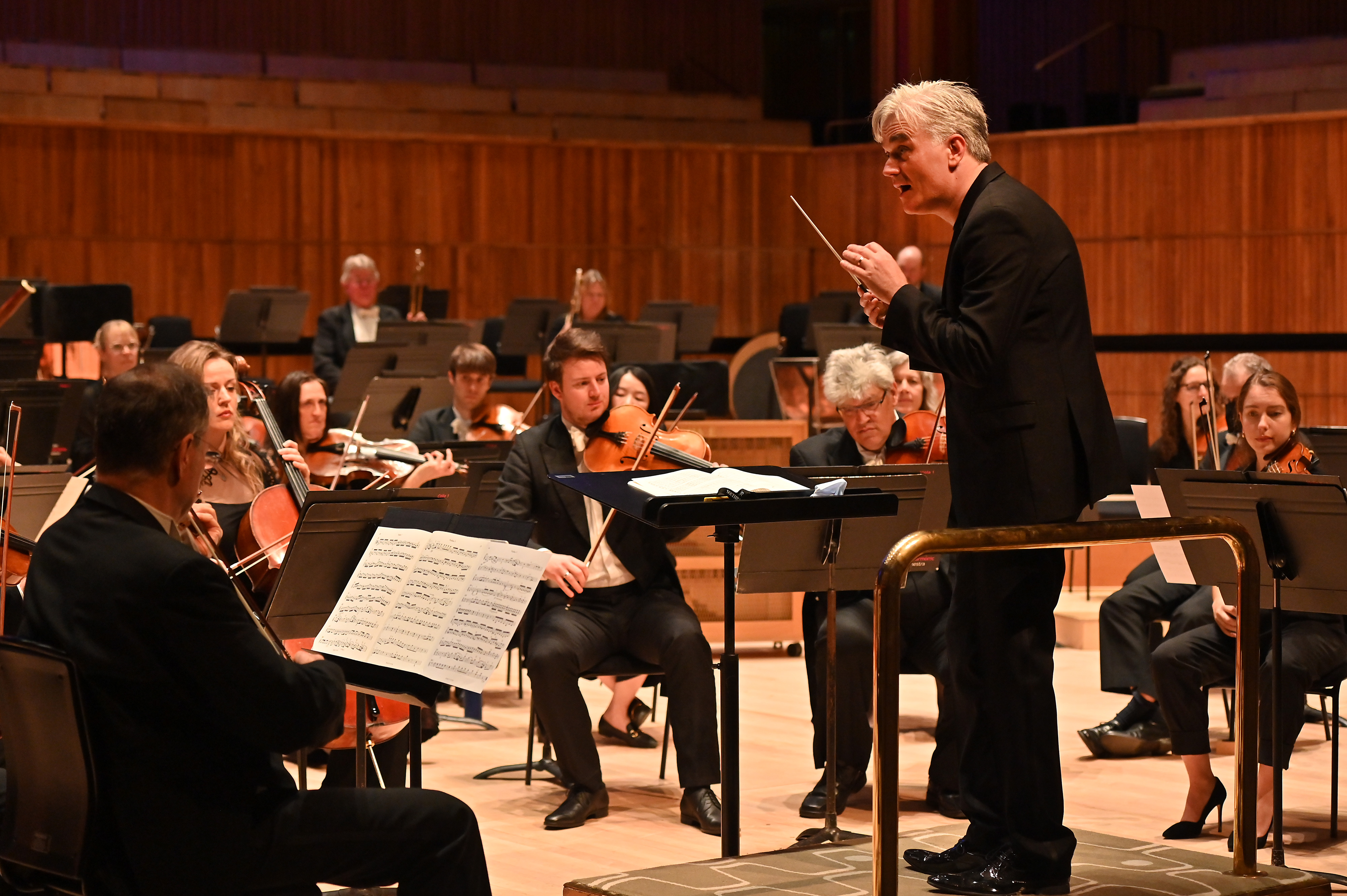
This was a strangely disappointing Prom, which promised much in programming, received excellent playing from the BBC Scottish Symphony Orchestra, and yet was somewhat let down in the first half, rather more than that in the second, by Ryan Wigglesworth’s conducting. Birtwistle and Beethoven offer in many ways an excellent pairing: much in common, not least aspects of temperament, an indomitability of what we might still cling to as embodying human spirit, and much that contrasts too. The goal-orientation that Birtwistle often – not always, and not always fully – eschewed is unquestionably central to Beethoven’s music, nowhere more so than in the ‘middle period’ more or less inaugurated by his Eroica Symphony. By the same token, the importance of continuity, no matter what the obstacles, remains crucial to both. Birtwistle himself pointed to the ‘wonderful example’ of Beethoven in ‘order or disruption of order’: ‘He never does what you think he is going to do. The surprise is perpetual.’    

We could have done with more surprise on this occasion, in both halves, though Earth Dances fared better. I should not be unduly harsh about what was in many ways a fine performance. Wigglesworth conducted The Minotaur at Covent Garden twelve years ago: very well, I thought, though I see now that I noted a certain ‘Classicism’ to his approach, which might be read in more than one way. Here, that translated, if indeed it were a similar thing at all, into apparent reluctance, doubtless furthered by the Royal Albert Hall’s cavernous acoustic, to let the music have its head. Clarity of detail was admirable and the performance was not without cragginess, but it came perilously close to drifting at times, especially during softer, slower passages. That said, there was a proper sense of the primordial at the beginning, of an aural landscape that had both always been and yet was anything but constant. It is difficult not to summon up some sort of images here, but the grit remained, as it should, in the music ‘itself’ and its tectonics, its dances not balletic but rather stratified and hieratic successors to Stravinsky’s Rite via Symphonies of Wind Instruments. Brute force and melancholy emerged as near-dialectical opposing forces in a world that lay beyond good and evil, a world that might be that of Nature yet is surely not only so. The performance was strongest when its dances registered as such, when fractures opened, volcanoes erupted; sometimes, though, it would have benefited from a stronger, not necessarily more interventionist but more determined (even Beethovenian) hand in having them do so. A due sense of return, not complete, not merely cyclical, proved nevertheless necessary and palpable at the close. 

The ecstatic reception accorded the Eroica in the hall bewildered me. To my ears, it never so much as stirred, at most skimming the surface in a performance that, to quote Dorothy Parker, ran the gamut of emotions from A to B. Put another way, it moved from an amiable first movement to a merely inconsequential finale, with only a hint of something more interesting in a Funeral March that disintegrated into something approaching stream of consciousness. It felt long, although it was probably on the quick side. (The two tend to go together, whatever metronome enthusiasts may tell you.) The first movement was certainly Allegro, arguably more than that, though brio was more or less entirely absent. It was less Bonaparte, let alone the memory of a great man, than Petit Trianon—with apologies to Marie Antoinette, in reality a far more interesting figure than that might imply. It had line, though scant sense of harmony, with a little more ib the way of temperament as time went on. Sadly, though, it was a matter of too little, too late. 

The second movement opened with greater promise. Although on the swift side, it was not unreasonably so; one sensed both greater character and more appropriate character. It was hardly granitic, yet there was nonetheless a darkness emerging from instrumental timbre without being limited to it. The turn to the major was odd, by turns tentative and insistent. Without a stronger – much stronger – sense of harmony, it all sounded rather episodic and empty. If designer Beethoven were your thing, the scherzo might have been it: sleek and, if not quite empty, little more than blithe. Exquisite horn playing notwithstanding, the trio offered little in the way of contrast. The finale offered a disjunct if pretty set of variations, with little in the way of humour, defiance, exultancy, anything Beethovenian. If ever there were a time in which our world needed to hear from the symphonic Beethoven, it would be now. Alas, he seems more distant than ever.


Wednesday, 27 November 2024

Rossi/Kubota/BCMG/Paterson: Saunders, Anderson, Eötvös, Illean, and Birtwistle, 26 November 2024


Wigmore Hall

Rebecca Saunders: Stirrings
Julian Anderson: Mitternachtslied
Peter Eötvös: Secret Kiss (English version, world premiere)
Lisa Illean: Cantor
Harrison Birtwistle: The Woman and the Hare; …when falling asleep (London premiere)

Alice Rossi (soprano)
Meg Kubota (reciter)
Birmingham Contemporary Music Group
Geoffrey Paterson (conductor)

London visits from the Birmingham Contemporary Music Group are rarer than we might hope, though doubtless many would object, quite reasonably, that visits to the capital need not be its priority. At any rate, a city seemingly ever more starved of new music was here blessed by fine Wigmore Hall performances of six works from the last twenty-five years. 

‘The strokes now faint now clear as if carried by the wind but not a breath and the cries now faint now clear,’ is one of two quotations from Samuel Beckett Rebecca Saunders selected to accompany her 2011 ensemble piece, Stirrings: in this case from Beckett’s late Stirrings Still. Although the only vocal work on the programme, it seemed to set up much of what was to come, its title and perhaps not only that coming to life in the opening double bass solo and what it provoked. Nine players, most onstage, some behind us, took us on a captivating journey of extraordinary sounds that were never mere sounds, always music, ever evolving, as if this were a geological process. As before in Saunders’s work, I could have sworn I was hearing electronics, but I was not: simply nine musicians and their instruments who seemed  before our eyes and ears to have, in Gurnemanz’s vision – and Wagner’s – time become space. A sense of musical landscape already hinted at the music of Birtwistle to come, as did that of inherent musical drama. It is probably better to leave Beckett the last words, again as selected by Saunders, this time from Company: ‘Light infinitely faint it is true since now no more than a mere murmur.... In dark and silence to close as if to light the eyes and hear a sound. Some object moving from its place to its last place. Some soft thing softly stirring soon to stir no more. To darkness visible to close the eyes and hear if only that. Some soft thing stirring soon to stir no more.... By the voice a faint light is shed. Dark lightens while it sounds. Deepens when it ebbs. Lightens with flow back to faint full. Is whole again when it ceases.’

A recent (2023) setting by Julian Anderson of Zarathustra’s roundelay followed. Undaunted by Mahlerian precedent, composer and performers (here the Pierrot ensemble, joined by soprano Alice Rossi and conductor Geoffrey Paterson) made something new yet old, in that sense at least like Saunders and Birtwistle. It is tribute to their success that not once did I think of Mahler, save for the occasional resonance, perhaps via Schoenberg. Stravinskian inheritance seemed at least as strongly in play, not least in rhythm. It opened de profundis – how could it not? – yet soon moved on, even before Rossi’s entrance. If the pace was slow – again, how could it not be? – it seemed over too soon, like midnight or a Nietzschean aphorism. Much caught the ear. vocal and instrumental melismata seemingly inciting one another, building to a midnight climax both dark and refulgent, touching and perhaps ironic in the brevity of its evocation of eternity. 

To complete the first half, we heard the premiere of the English version of the late Peter Eötvös’s Secret Kiss (2018). Another arresting opening, this time from percussion, set the scene for a typical yet typically individual melodrama, words selected by Mari Mezel from Alessandro Baricco’s novel Silk. Five players, on flutes, clarinets, percussion, violin, and cello, were joined by reciter Meg Kubota and Paterson, seemingly bringing a silken world into existence before our ears. It was an instrumental as much as a verbal drama we heard, processes recognisably rooted in central European tradition – Webern, Bartók, et al. – yet reinvented in magically pictorial terms that were entirely Eötvös’s own, Bluebeard notwithstanding. My sole reservation related to what sounded like overmiking. I wondered whether it were simply a feature, if an odd one, of the piece, yet its persistence in the two Birtwistle pieces suggested otherwise. Maybe it was nonetheless an artistic decision; if so, at least to my ears, it proved a pity, detracting not insignificantly here and later from the ultimate coherence of otherwise spellbinding performances. 

Lisa Illean’s Cantor (2017) opened the second half, verse by Willa Cather separated by entirely different, yet no less exquisite, instrumental movements for somewhat augmented ensemble, more string-focused than anything heard previously (or afterwards). Whether it were simply Schoenberg on my mind, I am not sure, but I sensed his presence at a distance in noticeably un-Schoenbergian, postspectralist (?) music: a pattern from Pierrot here, a floating vocal line there. As with all pieces on the programme, rates of change, be they melodic, harmonic, or timbral, seemed just right in work and performance alike. 

The Woman and the Hare (1999) brought singer, reciter, ensemble, and conductor together in exploration of a post-Gawain landscape both alluring and threatening, unmistakeably English in its melancholy and in its vocal and instrumental reinvention of Morgan Le Fay. The two voices contrasted and complemented, embellished and elucidated, music not necessarily ‘autonomous’, yet unquestionably ‘itself’. Stravinsky was an abiding, yet intangible presence, as sure as in Punch and Judy, all the way down to Birtwistle’s musical bedrock. And like Stravinsky’s Pierrot, it was above all an instrumental masterpiece—and yet… 

To hear …when falling asleep immediately after (twice, the second time as an encore) was instructive and, it seemed, inevitable. The 2019 commission sounded less a homage to the earlier work, despite the return to responsorial combination of singer and reciter, than its distillation in a new yet related world. Rilke in English translation (Jochen Voigt) and words drawn from Swinburne’s elegy for Baudelaire here sounded more strongly in opposition, until they were not. Instrumentalists played on as as ever-changing voice of continuity, in this world and the evening’s music as a whole.


Friday, 8 March 2024

Arditti Quartet at 50: Harvey, Milliken, Hosokawa, and Birtwistle, 7 March 2024


Pierre Boulez Saal

Jonathan Harvey: String Quartet no.1 (1977)
Cathy Milliken: In Speak for string quartet (2023, world premiere)
Toshio Hosokawa: Oreksis for piano quintet (2023, world premiere)
Birtwistle: String Quartet: The Tree of Strings (2007)

Irvine Arditti, Ashot Sarkissjan (violins)
Ralf Ehlers (viola)
Lucas Fels (cello) 
Tomoki Kitamura (piano)

On 7 March 1974, the Arditti Quartet gave its first concert at the Royal Academy of Music, music to honour Krzysztof Penderecki on bestowal of an honorary degree. Fifty years later to the day and several changes of personnel later – Irvine Arditti the one constant – the Quartet celebrated at Berlin’s Pierre Boulez Saal its fiftieth birthday, followed by a reception hosted by the Paul Sacher Stiftung, which also hosts the ensemble’s archive . True to its spirit, here was a mixture of new and newer: two Arditti commissions, Jonathan Harvey’s First String Quartet (the first ever) and Harrison Birtwistle’s The Tree of Strings sandwiching two new commissions from Cathy Milliken and Toshio Hosokawa. 

We do not hear enough of Jonathan Harvey’s music. If that was the case before his death in 2012, it is all the more so now. Reminders such as this can do no harm at all. In a single movement, which, to my ears at least, might possibly have been subdivided into three sections of unequal length, it opened with violin (then viola, then cello) harmonics, melting yet also, like snowflakes, flurrying, becoming stronger: something both fragile and yet primal, the latter especially in the unison melody that emerged and seemed to rule over the Quartet as a whole. It felt like embarking on a magical adventure for composer and performers, the latter tracing and projecting the piece’s expressive contours with typical expertise, as the repertoire piece it must be for them, though without a hint of the routine. Sparks flew later, what in the work of another composer we might characterise here as éclat, but here suggesting something deeper, more fundamental, perhaps even Germanic, acknowledging the composer’s crucial encounter with Stockhausen. Material that emerged from the debris developed in any number of other ways, prior to a third section (?) in which a ghost in the machine, a machine in the ghost, or perhaps both propelled the music on its way. Unifying yet further developing, like the ‘tradition’ to which it perhaps still laid claim, the music yet had no ‘return’ in a sign-off of deft brevity. 

Cathy Milliken’s In Speak immediately sounded, perhaps to state the all-too-obvious, as if arising from different cultural concerns, a proper contrast in programming as well as composition. Almost dance-like at times, with unmistakeable ‘human’ interjections of speech, ghostly whistling, and so on, it seemed to take in a more ‘connected’ world (not that there was anything remotely insular about Harvey) and some sort of dramatic-conceptual stimulus arising therefrom, without that being ‘the point’. There was even, I thought, a hint of celebration. ‘Tradition’, if it still exists at all, has moved on considerably in half a century, not least thanks to the Arditti Quartet. ‘I hear different notes emerging’, ‘punchline’, ‘I dragged’, ‘until he was pushed’, ‘finding the right word’, a concatenation of verbal phrases enabled strings to take over again, in turn inaugurating a slower moving, constantly shifting section. Further musical scampering, almost suggesting a ‘classical’ return of material in ternary form – suggesting, not straightforwardly representing – brought the piece to its conclusion.   

The players were joined by pianist Tomoki Kitamura for Toshio Hosokawa’s Oreksis for piano quintet. Again, this was a very different musical world: not only the soundworld, but procedures, preoccupations, everything. Post-‘impressionist’? Perhaps. Post-Debussy? A somewhat stronger perhaps. But it was not only, or principally, post-anything, however helpful such thoughts may be to gain our initial bearings. Centres of gravity proved very different, lines emerging from them, whilst those centres remained obstinately, strangely alluring. The pianist was not a ‘soloist’, yet had a somewhat different role, seemingly growing from the piano’s different instrumental qualities. (That may sound obvious, but it is far from always the case.) Dreamlike in apparent creation of chords, it built slowly to climaxes that seemed always to be pushed a little further into something beyond. Sliding, slithering lines later seemed liberated from whatever it was that had kept them grounded: new ‘air of another planet’ perhaps? There both are, and are not, new things under our sun(s). Music floated with strange precision, upwards once again, into… 

For the final work on the programme, following the interval, we turned to Birtwistle’s 2007 String Quartet: The Tree of Strings. If one might have found a point of comparison with Harvey’s piece in a ‘frozen’ opening, what struck more forcefully again was the difference from all that had been heard before. There was certainly no question who the composer was—nor how great our loss continues to be. These were not so much musical fractals, as some might musically imagine trees, but rather this sounded as music born of an ancient, far from consoling, ‘then’ as seen, or heard, from ‘now’. Melody, harmony, even gesture were as immediate as in stage works such as Gawain or The Minotaur; there was a similarly keen sense of narrative(s) too, without moving into the realm of representation. Even when occasionally more frenetic, it retained a sense of spareness, of everything counting. A not un-Stravinskian candle continued to burn, even to dance, to rock; yet there was a deeper melancholy that seemed to speak of and from remembered or invented landscapes of a Britain beyond its modern towns and cities (not anti-metropolitan, but rather non-metropolitan) as well as memories of Dowland. (How the composer must have hated the snake-oil-salesmen of ‘Brexit’. How wonderful it would have been to see him give Nigel Farage a piece of his mind, not that Farage would have known what to do with it.) 

Strength persisted, intensified, through techniques seeming to cross the centuries without ever truly being ‘of’ them. Was that a mediaevalism there? If so, it was hardly the point. Compelled, so it seemed, by the music’s inherent drama, the players, one by one, moved from centre stage to new stations around the hall, the spatial quality of the musical landscape confirmed and extended. It was no gimmick, as it might have been for many – was there a less gimmicky composer than Birtwistle? – but rather born of an expressive need. Was there a centre any more? That may be the question of musical, and not only musical, modernity, or at least a question. Does it matter? Others left the hall, Lucas Fels’s cello persisting with gruff integrity that came close to overwhelming. It, or rather this, did matter. 

To read my 2009 interview with Irvine Arditti, ahead of two performances at the Edinburgh Festival, please click here.

Sunday, 8 May 2022

Kožená/Staples/LPO/Gardner - Birtwistle and Mahler, 6 May 2022


Royal Festival Hall

Birtwistle: Deep Time
Mahler: Das Lied von der Erde

Magdalena Kožená (mezzo-soprano)
Andrew Staples (tenor)

London Philharmonic Orchestra
Edward Gardner (conductor)


London Philharmonic Orchestra, Edward Gardner (c) Mark Allan 


For many, the greatest English composer since Purcell and the greatest English composer of opera tout court, Harrison Birtwistle died little more than a fortnight before this concert. Even for those more sceptical, or with other candidates, his was a titanic presence not only in English and British music, but in the music of the twentieth- and twenty-first centuries. With the partial exception of Elgar, here, rightly or wrongly, was the first major composer from this island viewed in his lifetime with equal esteem by the rest of the world. Was anyone ever disappointed by a Birtwistle work? Some were repelled, true, yet they were usually those who knew nothing of music and cared less, wishing simply to strike a reactionary pose. The claim that Britten walked out of the premiere of Punch and Judy seems almost certainly untrue—why would he?—though it does not stop the story being repeated. (I suppose I am at least part-guilty here.) The sheer quality—and individual quality at that—of each work was breathtaking. It was, then, a fitting albeit unexpected tribute, in a programme long planned, to have this concert dedicated to Birtwistle’s memory. 

Deep Time has gone deeper, I think, but Edward Gardner’s performance with the LPO nonetheless gave a good sense of its essence, of ‘how it goes’. A typical and typically unique opening, dark and ominous, growled, formed, developed, layers of geological sediment, both material and metaphorical, beginning to overlap, punctured and once again formed by shafts and shards of light. Processes, ‘natural’ and ‘mechanical’, the latter not a million miles from the clocks as well as the heavier industry of northern historical landscapes, had us ask initially whether the strange yet familiar musical juggernaut passing before us were animate or inanimate: Harrison’s Clocks or Minotaur? Or, as Birtwistle himself pointed out: ‘geologic time,’ as ‘first proposed by the eighteenth-century Scottish geologist James Hutton,’ involving ‘a perpetual cycle of rock erosion, sedimentation and formation for which there is “no vestige of a beginning, no prospect of an end”.’ 

Process, however, and drama—and colour, what colour! Birtwistle and Brahms probably do not have much in common, though their CDs sit close, alphabetically, on my shelves—likewise those of Britten and Boulez, contributing to a host of difficult relationships, sometimes shading into antipathies. Nonetheless, music by Birtwistle and Brahms shares a characteristic in that, though sometimes decried as lacking in colour compared, say, to fantastical creations from French and Russian schools, as soon as one listens, a myriad of colours opens up beneath the surface, in fact coming together to form that surface. In Brahms’s case, I once heard that likened to the magic of a pond: not meant unkindly, far from it. Here, it is a slice of geological landscape and its ecosystem. How does it fit together? It is difficult to say, though hocket appears to provide both glue and dynamism: continuity in discontinuity. Vertical shocks and after-shocks help form its beauty, but as so often, so does the landscape behind: changing, yet probably on account of our shifting standpoint, rather than its. Birtwistle’s memorial for Peter Maxwell Davies, premiered in 2017 by Daniel Barenboim, continued his own endless parade. 

Das Lied von der Erde can be understood, or at least experienced, as a memorial too, though it should no more be reduced to that than should Deep Time. For me—others may differ—Mahler ideally requires a firmer view; it is ‘conductor’s music’ in an emphatic sense, though certainly not only that. It can take many views, from Boulez to Haitink, Klemperer to Bernstein, but here Gardner seemed too ready to act, at least until the final song, as ‘accompanist’. This was a performance, at any rate, that, again until that long, final farewell, sounded very much as song-cycle rather than symphony. Fair enough, one might say; is that not a view in itself? And nowhere, after all, does Mahler call Das Lied a symphony. True, though surely there is an implicit call for greater continuity than we heard here. On the performance’s own terms, though, we heard estimable contributions by Magdalena Kožená, Andrew Staples, and the LPO, and were mercifully not subjected to a perverse standpoint, to a determination to do things to Mahler’s score, which can all too readily prove the obverse side to the ‘personal’ coin. 

Staples opened the cruel (to the tenor) first song not only valiantly, but with great success, a supportive Gardner doubtless drawing on his long operatic experience to unsure that the singer could be heard. If the orchestra sounded at times a little harsh—beyond, I think, the demands of sardonic mood—that was probably more a matter of the Festival Hall acoustic, especially in the Stalls, than a mark of interpretation. Its performance, like that of Staples, was in any case admirably clear and pointed, teeming (perhaps not entirely unlike Birtwistle’s piece) with life/death. ‘Dunkel ist das Leben, ist der Tod.’ The difference between ice and fire was mediated on a knife-edge by sweet LPO violins. 

Kožená’s approach, ineffably sincere, unquestionably rooted in the verbal text, had an instrumental quality to it too, especially in the second song, ‘Der Einsame im Herbst’, as if her voice were another woodwind instrument, perhaps a chalumeau, joining the LPO consort. Ambiguity between twin needs for peace and refreshment (‘Ja, gib mir Ruh’, ich hab’ Erquickung not!’) was fundamental, the contrast with a bright-eyed ‘Von der Jugend’ (Staples) clear and meaningful. Nicely etched—one could well-nigh hear the brushstrokes—it was in turn succeeded in contrast by an expressive ‘Von der Schönheit’ from Kožená. A vivid orchestral parade could have been a little sharper, but resonances with earlier works made their point: another ‘endless parade’. Within the song, moreover, Kožená characterised with keen sense of drama contrasts between outer sections and more volatile middle, the steed’s mane tossed in frenzy. Staples and Gardner forged a sense of touching intimacy in ‘Der Trunkene im Frühling’, as if the forest Siegfried had finally attained the capacity to reflect. Throughout, we heard intriguing contrasts and much lovely detail; slightly lacking, whether by default or design, was that symphonic guiding thread. 

The dark opening chords of ‘Der Abschied’ brought, in context, momentary remembrance of Deep Time, but more so, a sense of fate so as necessarily to introduce oboe and other solos. It was time for a long farewell, Kožená’s entry thoughtfully heralded by the arrival of a text message somewhere in the audience. Even that, however, could not stop the sun sinking as flute and mezzo sang. Kožená painted the landscape beautifully, not least the floating moon, ‘wie eine Silberbarke’. It was a world of silver and shadows, of moonlight, like Birtwistle’s very different landscape both physical and metaphysical. With the crucial new vista between ‘letzten Lebewohl’ and ‘Ich sehne mich’, as with subsequent return to darkness, not only did Kožená’s voice bloom, but the performance turned decisively to symphonic mode; via Schopenhauerian metaphysics, fate was proclaimed the order of the day. On that latter turn, the aural sky turned crimson; and so began the inexorable tread to eternal peace. ‘Ich suche Ruhe für mein einsam Herz.’ And so it felt, woodwind barbs notwithstanding. For this might be death, but it was no longer dark; that had been life. A radiant, deeply moving, final farewell was heard and felt. With the fragile, ineffably touching advent of the mandolin, tears began to flow, reflected in heavenly (celestial) arpeggios from, yes, the celesta. ‘Aufs neu! Allüberall und ewig blauen licht die Fernen!’ A glimpse, then, of eternity: ‘Ewig … ewig…’.

Monday, 21 October 2019

The Mask of Orpheus, English National Opera, 18 October 2019


Coliseum

Images: (c) Alastair Muir, 2019

Orpheus the Man – Peter Hoare
Orpheus the Myth, Hades – Daniel Norman
Orpheus the Hero – Matthew Smith
Eurydice the Woman – Marta Fontanals-Simmons
Eurydice the Myth, Persephone – Claire Barnett-Jones
Eurydice the Hero – Alfa Marks
Aristaeus the Man – James Cleverton
Aristaeus the Myth, Charon – Simon Bailey
Aristaeus the Hero – Leo Hedman
The Oracle of the Dead, Hecate – Claron McFadden
The Caller – Robert Hayward
First Priest, Judge of the Dead – William Morgan
Second Priest, Judge of the Dead – David Ireland
Third Priest, Judge of the Dead – Simon Wilding
First Woman, Fury 1 – Charlotte Straw
Second Woman, Fury 2 – Katie Coventry
Third Woman, Fury 3 – Katie Stevenson
Dancers – Joan Aguila-Cuevas, Sam Ford, Ripp Greatbatch, Stefano de Luca

Daniel Kramer (director)
Lizzie Clachan (set designs)
Daniel Lismore (costumes)
Peter Mumford (lighting, video)
Barnaby Booth (choreography)

Ian Dearden (sound design)
Chorus of the English National Opera (chorus masters: James Henshaw, Mark Biggins)
Orchestra of the English National Opera
Martyn Brabbins, James Henshaw (conductors)


‘All opera is Orpheus,’ Adorno once declared – although, typically, what he meant by that was rather more complicated than mere quotation would suggest. Perhaps, in some sense, all music in the Western tradition is too – again, so long as we take care, as Harrison Birtwistle always has, never to confuse starkness with over-simplification. In the beginning, then, was Orpheus, his myth repeated, elaborated upon, throughout Western musical tradition, and especially throughout Western operatic tradition. It is surely no coincidence that it was with this monumental work that Birtwistle sought his most radical extension yet of that line. He wanted, he said, ‘to invent [my italics] a formalism which does not rely on tradition in the way that Punch and Judy, my first opera, relied on tradition. There I used forms such as the chorale, toccata and gavotte. I injected them into my work just as Berg injected formal ideas into Wozzeck. In The Mask of Orpheus, I didn’t want to hark back any more; I wanted to create a formal world that was utterly new.’


Expectations could not have been higher. For some, yours truly included, this was a moment for which we had been waiting the whole of our musical lives. From a career strewn with masterpieces, here came at last a second staging of Birtwistle’s Mask of Orpheus: heard only once complete, in concert, since its 1986 premiere, and never since seen in the theatre. I had previously only managed to hear a single act, in concert, at the Proms: an unforgettable experience that only increased my hunger to hear – and to see – more. Present at that first, ENO performance, Alfred Brendel extolled The Mask of Orpheus as the first English musical masterpiece since Purcell. Many will find that view a touch harsh on some music and composers – even assuming Handel’s exclusion – intervening. Be that as it may, no one with any serious interest in music or opera, indeed no one with a passing interest, yet possessed of half an ear and a little curiosity, would deny the work’s stature.


Musical values were high, as they would have to be: there is no more point putting on Birtwistle with musicians unequal to its challenges than there is Stockhausen. That excellence we heard from ENO forces should nevertheless not be taken for granted. The conflict between rational and irrational, between what Orpheus must do to win back Eurydice and what his urge to act as a human being, a conflict as old as that between Apollo and Dionysus and in many respects to be identified therewith, lies at the heart of this work. The climax to the second act, indeed the whole of that extraordinary structure of recollective arches, not only retains its enormous, truly post-Wagnerian power; it seems to increase with every hearing. This proved no exception. One was truly left reeling then – and not only then – at least insofar as one could separate the musical performance from its sadly inadequate scenic realisation, on which more shortly.


Moreover, if that conflict between the demands of reason and those of emotion lies at the work’s dramatic heart, so too does the variety of ways in which its participants, us included, might look at, experience, reflect upon that conflict, not least through time, ours and the characters’ (broadly speaking, as human, myth, and hero, though never in linear fashion, and just as much musically – lyrically and formally – as verbally and scenically). In a sense, this is true of all opera; ‘all opera is Orpheus’. But it is perhaps more so here, more overtly so, more strenuously. Martyn Brabbins and James Henshaw, assisted by Adam Hickox, did a superlative job of enabling the excellent orchestra, chorus, and cast to express what they could of this, Peter Hoare a fascinatingly flawed, multifariously tragic Orpheus the Man, Marta Fontanals-Simmons an alluring, inscrutable, even alluringly inscrutable Eurydice the Woman, ably supported by penetrating, intelligently contrasted performances from Daniel Norman and Claire-Barnett Jones as their mythical counterparts. James Cleverton as Aristaeus and Claron McFadden as the extraordinary Oracle of the Dead also stood out dramatically, but there was nothing approaching a weak link to the cast. Barry Anderson’s electronic realisation, with sound design by Ian Dearden, proved as liminally dramatic in its way as Stockhausen, as pregnant with dramatic purpose as an ‘interlude’ in Wagner.


If only Daniel Kramer’s bizarre, ultimately vacuous production had been remotely equal to its task. Where the work speaks of and with starkness and complexity, Kramer seemingly mistook the latter for a gaudy variety show, validated by inclusion of more and more unconnected – with each other, let alone with the work – acts. This was not the idea of the circus, nor indeed the idea of anything else; it was a hideous and, doubtless, highly expensive mess. Occasionally, the possibility of recollection, of memory, even of dream sequence, asserted itself, more by default than anything else. For the most part, we suffered an absurd – never, alas, absurdist – display of exaggerated, ‘saucy’, latex-clad nurses and medical equipment; of supposedly shocking, yet actually deeply tedious, sexual acts; of people – often entirely unclear who they were, and to what end – emerging and sinking into bathtubs; of highly skilled acrobats (for the opera’s mime action) removing and replacing their clothes, before resuming their distracting activity; of general hyperactivity that not once seemed to enquire what it, let alone of anything else, might be for, let alone of whether its seemingly hapless orientalism might prove a tad problematical to some. It was unclear that the ‘concept’, if one may call it that, was anything more than an ageing rock musician – we see the platinum discs on the wall – Orpheus, holed up in his extravagantly equipped hotel room, having a bad trip. And even that was perhaps to dignify it.


Was this, perhaps, opera for a world with its eyes – and possibly ears – on several screens at once, craving instant diversion rather than satisfaction? Was there even something of the postdramatic to it? I can see that the argument might be made, but frankly, in this particular case, I think not; or if it is, then there really ought to be more to it than this. Constant changing of the emperor’s still newer, still more sparkly, clothes – ‘by artist, campaigner and designer Daniel Lismore, described by Vogue as “England’s most outrageous dresser”’ – was not enough, never nearly enough. Nor was there any sign of irony, of critique, of anything more than camp excess really – which is not to deny the excellent artistry of those on stage, doing what they could. Carry on Birtwistle, then? It just about qualifies as a point of view, I suppose; or, better, as the slender basis for one. I cannot help but think that it would have been better left on the shelf, along with the rest of this wasteful production: a non-ironic cross between Robert Lepage and Liberace.


The absurdity might have worked; all manner of things might have worked; however, in the absence of a connecting pair of ears, let alone anything between them, this was doomed to remain an endless parade – in a decidedly non-Birtwistle sense – of effortful vulgarity on- and offstage, as idiotic as it was wasteful. Wherever one looked, one was assailed with advertisements for a crystal company to which I shall refrain from granting further publicity. Nothing could have lain further from the essence of Birtwistle’s score, nor indeed from Peter Zinovieff’s libretto. Yet such contradiction was not fruitful; nor even, so it seemed, intentional. If anything, it simply suggested a director out of his depth – and not even in the opera’s shallows. The true tragedy, of course, lies in the damage this may do to prospects for a third production, even for a further concert performance. Not for the first time, alas, ENO has snatched defeat from the jaws of victory.


Monday, 11 September 2017

Musikfest Berlin (3) – Michel-Dansac/Ensemble Musikfabrik/Poppe - Saunders, Birtwistle, and Dowland, 9 September 2017


Kammermusiksaal, Philharmonie

Rebecca Saunders: Yes (2016-17, world premiere)
Birtwistle: Cortege (2007)
Birtwistle: 26 Orpheus Elegies (2003-4) interspersed with:
Dowland, arr. Birtwistle: Lachrimae: seaven tears figured in seven passionate pavanes (1604/2009)

Doniatenne Michel-Dansac (soprano)
Andrew Watts (countertenor)
Peter Veale (oboe)
Mirjam Schröder (harp)
Paul Jeukendrup (sound design)
Ensemble Musikfabrik
Enno Poppe and Harrison Birtwistle (conductors) 

Other soloists:
Helen Bledsoe (flute, bass flute)
Carl Rosman (clarinet, bass clarinet)
Alban Wesly (bassoon)
Christine Chapman (horn)
Marco Blaauw, Nathan Plante (trumpet)
Jan Roskilly (trombone, bass trumpet)
Melvyn Poore (tuba)
Dirk Rothbrust, Rie Watanabe (percussion)
Ulrich Löffler, Benjamin Kobler (piano)
Krassimir Sterev (accordion)
Hannah Weirich, Yoonhee Lee (violin)
Axel Porath, Kirstin Maria Pientka, Tim-Erik Winzer (viola)
Dirk Wietheger, Andreas Müller (cello)
Florentin Ginot (double bass)

Images: Kai Bienert

Whilst London once again endured that ghastly annual farrago at the Royal Albert Hall – if, as apologists claim, it is ‘just a party’, then kindly choose a ‘theme’ other than imperialism – Berlin showed what British music, European music, or better still, just ‘music’, can and should be: bold, forward-looking, outward-facing, and above all, nourishing as well for the body as for the soul. It was almost certainly more than a mere programming coincidence that the three composers featured here were all English, but there was certainly nothing nationalistic concerning the choice, any more than there would have been had this been an all-German programme – or, for that matter, an all-nineteenth-century programme. We make connections when and where we and the material will. The crucial thing is quality; that was not lacking here.


The first part of the concert was devoted to the premiere of Rebecca Saunders’s Yes, a spatial performance for soprano (Doniatenne Michel-Dansac), nineteen soloists (Ensemble Musikfabrik), and conductor (Enno Poppe), after the final chapter of Ulysses (in particular, Molly Bloom’s monologue). Joyce famously said he wanted his book to end on the most positive word in the English language – and so it did. So too does this work of vocal and instrumental theatre, in some ways standing in the tradition of Birtwistle’s music theatre and other musical dramatic works, although certainly not merely to be assimilated to them. Beat Furrer’s FAMA also came to my mind, if only because it is not so long ago that I heard its London premiere. But the previous weekend’s Monteverdi could not also help but hover in my contextual consciousness, not least since this evening we also heard from both Ulysses and Orpheus. This, then, proved in many ways – I have only hinted at a few – ideal programming both in itself and in the context of the broader themes of this year’s Musikfest Berlin.


We hear first the voice, then double bass. And so, a new Odyssean journey is underway – albeit from Molly Bloom’s standpoint, if we care to think about it that way (and why would we not?) The Philharmonie’s Kammermusiksaal proved as much instrument as mere location: Monteverdian echoes again, or perhaps better, pre-echoes, hinting at the Vespers next weekend. There was arguably more ‘Mediterranean’ spirit – not in some narrow geographical way, but open as the sea itself, open as Angela Merkel’s Germany itself (at its best) – than there had been in the strangely insular world of John Eliot Gardiner’s ‘English’ Monteverdi. New members of the ensemble joined, all over the hall: a microcosm perhaps of a world outside, but also, perhaps more importantly, a created world, like that of Joyce. Art does not merely reproduce ‘reality’; if it did, we should have no need of it.


Trumpets called, duetted, almost as if this were St Mark’s. Wind surrounded us from the balconies above. This was a theatre of instruments and of instrumentalists, whether or no Michel-Dansac were singing, her contributions and those of everyone else equally impressive in virtuosity and the humanity that incited and enabled. Rarely were positions static for long; our ears and our minds moved, even if we physically stayed put. (Again, the precedent may be found in Joyce, Monteverdi, wherever one wishes…) Nothing was to be taken for granted, certainly not the sound of the soprano voice, which often might have been taken for a contralto. Indeed, that is precisely how Michel-Dansac had been listed when, earlier this year, I heard her in Le Marteau sans maître! It was not only the ‘range’ of her voice, but of all ‘voices’, that expanded. Hierarchies, spatial and musical dissolved as, say, the (wonderful) accordionist had his ‘spot’ and then moved on: or were there indeed no such hierarchies in the first place? Was that simply my need to think of them that way, and if so, what does that say about me? This was, then, in many respects, an ‘open’ world: Berio (Sinfonia) suggested itself more than once, perhaps even in the odd musical figure, although that may well just have been my imagination playing tricks. This was, I think, more drama than ritual, insofar as the distinction makes sense (on which one might perhaps consider Parsifal), not that there is anything wrong with ritual – as Birtwistle would triumphantly show. Michel-Dansac’s final stream of consciousness muttering, or more than that, proved unusually ‘audible’. Once again, what might that mean? And why might we ask that? Scale is not everything; indeed, as the Orpheus Elegies to come would show, it is perhaps nothing at all. This was nevertheless the largest-scale work by Saunders I had yet heard, and it confirmed, even enhanced, the view I have of her as one of the finest composers of her generation.


The second half opened with Birtwistle’s Cortege, a ‘ceremony’ written in memory of Michael Vyner, itself a reworking of the much older ceremony, Ritual Fragment. It is, perhaps, more familiar territory to me – although how ‘familiar’ can the strange antiquity of Birtwistle ever be? The musicians certainly played it with all the confidence, yet none of the taking for granted, of a ‘classic’ work, which it is. Different soloists again took their ‘turn’: this is an ensemble piece in all manner of ways. There remains, I think – or did in this performance – something of a post-Stravinskian ‘attitude’ to the music, The Soldier’s Tale still somehow present in the background, as it is for so much music theatre, actual or related. Perhaps even The Rite there somewhere too, in the odd instrumental line? I do not think it is anything so obvious as ‘influence’ by now, but as I said above, one makes connections when and where one will. This ritual teemed with drama, at any rate, at least as much as any work with words might have done. Whatever distinction I might have made in the first half had already been called into question, indeed dissolved.


So too was it with the interweaving of Birtwistle’s Dowland arrangements with his own Orpheus Elegies. That antique, indeed archaic (in the proper sense), ‘authenticity’ of which, in which, the elegies speak, with or without words, was immediately apparent in the very first. (Many of them have no vocal part at all, simply or not so simply alluding to the Rilke sonnets from which the work takes its name and, in part, inspiration.) The refracted sound of the old viol consort in Dowland-Birtwistle offered its own counterpart, challenge, emotional intensification, all the more so perhaps when, in the second piece, strings were joined by wind: never quite as one expects, yet never seeking attention either. Veiled rather than violent, one might say, but is that again all too easy a formulation? The world of the Orpheus Elegies: rhythms as much as melodies, and above all their clashes (occasionally in stark relief through the use of metronomes). Occasionally, I thought of Elliott Carter’s polyrhythms, although again I am not quite sure why: perhaps, again, that was just my own fancy, but why not? Webern’s celebrated Bach arrangement hovered also in the (non-electronic) penumbra of my consciousness: father, or mother, to so much in this tradition, just like his ‘own’ work. And were not Dowland’s ‘passionate pavanes’ themselves also speaking of a ‘passion’ one might conceivably associate with Bach? The dissonances were certainly as moving, likewise the grace with which they were presented, a grace that in no way precluded depth. That the final Dowland arrangement seemed truly to emerge from within the 16th Elegy (they were not performed ‘in order’, I should add) seemed to make both more present and yet more distant. After that, after those ‘true tears’, the final (19th) Elegy offered an instrumental conclusion unadorned in every respect.


Saturday, 23 April 2016

For St George's Day: 'migrant' and other suspect English music


I am, I hope, one of the least nationalistic people alive, but I could not help thinking, when seeing a Gramophone list of ‘Top 10 English Composers’ for St George’s Day, that we could do a great deal better than that. John Tavener (rather than John Taverner)? Delius, seriously? The ludicrously overrated Britten (who might make it in for The Turn of the Screw, but for little else)? Not that I expect members of the Campaign for Real Barnacles to agree, but I thought I should offer an alternative top ten, celebrating not only, in ‘nativist’ style, those born here, but those who lived and worked here.


John Taverner: composer of music of such complexity as to make most post-Schoenbergian music seem like ‘easy listening’. He saw the light, thank goodness; he seems to have become a proper Englishman and gave up on music.


William Byrd: a traitor in hock to un-English, Italianate Popery who composed for other such traitors (the politically correct might call them ‘recusants’ or even 'victims of state-sponsored religious persecution', the Muslims of their day).
 
 
Henry Purcell: the English Orpheus, whose music, alas, drew far too heavily upon Frenchified nonsense.


George Frideric Handel: a German ‘migrant’ in the service of German ‘migrant’ monarchs.


Franz Joseph Haydn: a shady ‘Croat’ who shamelessly took away ‘British jobs for British people’, even ‘sending home’ the money he purloined; Gordon Brown would have had none of that.


Felix Mendelssohn: Another temporary ‘migrant’, not only German, but shock horror, Jewish too. Still, he visited Birmingham.


Edward Elgar: composer of German music, masquerading as an Englishman.


Alexander Goehr: son of a German ‘migrant’ who, still worse, was a pupil of Schoenberg and had the temerity to introduced Monteverdi’s foreign 1610 Vespers to this scepter’d isle.


Harrison Birtwistle: composer of such cacophony that a group of common-sense Englishmen assumed their patriotic duty to ‘heckle’ performances of music closer to Stravinsky than to H Balfour Gardiner. From ‘The North’.


Rebecca Saunders: a woman, who moved to Germany. I can’t imagine why.
 
 
And I’ve still had to omit John Dowland and many others. Oh well: next year.


Wednesday, 24 June 2015

Birtwistle: The Corridor/The Cure, Royal Opera, 18 June 2015


 Linbury Studio Theatre, Royal Opera House

Woman (Eurydice)/Medea – Elizabeth Atherton
Man (Orpheus)/Jason, Aeson – Mark Padmore

Martin Duncan (director)
Alison Chitty (designs)
Paul Pyant (lighting)
Michael Popper (choreography)

London Sinfonietta
Geoffrey Paterson (conductor)
 

Outstanding in pretty much every way – just what an opera house should be doing, in this case in collaboration with Aldeburgh and the London Sinfonietta. Although The Corridor was premiered in 2009, with the same cast, this was my first encounter; and The Cure had been given its first performance but a few days earlier, again in Aldeburgh. The two chamber operas could clearly work separately, and I hope that they will, in conjunction with any number of other works; in tandem, however, there are all manner of connections one may make, whether as performer, director, or audience. Agency, not least female agency, is but the most obvious, although that is not to minimise its importance. Identical instrumentation (violin, viola, cello, harp, flute, clarinet) and, in this case, an identical cast, served to strengthen unity, but also to allow us to consider what is different.


The Corridor takes us, once again, to that foundational musical myth so beloved of Birtwistle, that of Orpheus. But a moment – his turning back, wondering why Eurydice is not by his side – and then a lifetime’s reaction. David Harsent and his composer have us ask whether Eurydice in fact ever really wanted to leave Hades. She was lagging behind and Orpheus wonders where she has gone, turning around involuntarily. Love and tragedy are expressed in their laments following the event, but did they ever have a chance, second time around? She interacts with the players in Martin Duncan’s straightforward, powerful staging, not unlike one of those increasingly popular stagings of Bach’s Passions. Birtwistle’s score steers a fascinating path between tight rhythmic cellular writing and something more capable of subdivision, even perhaps rubato (or at least homage to Monteverdian freedom?) Stravinsky versus Schoenberg, we still might say. Or rather, Stravinsky and Schoenberg.


Birtwistle’s love of antique wildness exhibits itself once again: a reinvented antique wildness, not born from our paltry knowledge of ancient music, but something far more powerful. But there is no sense that we have heard this all before, for we have not. Fourths and fifths seem to speak to us from the age of organum – and beyond. The harp – what writing he has always offered for that instrument! – is no stranger to calamity, to catastrophic caesura. Vocal lines, in impassioned performances by Mark Padmore and Elizabeth Atherton, speak again of the invention that comes with longstanding assurance. Everything draws in – and makes us rethink what we thought we knew.

 
The Cure was conceived explicitly as a companion piece. Here, in the words of the excellent conductor, Geoffrey Paterson, the six solo instrumentalists of a work that had come close to ‘secular oratorio, for much of its duration’ coalesce ‘into a mini orchestra whose endlessly varied colouristic possibilities are at the service of a viscerally operatic scenario’. As ostinato builds up climactically, but never predictably, we reach the (again surprising) climax of a tale adapted by Harsent from John Gower, who in turn had adapted it from Ovid. Medea and Jason having returned to Colchis with the Golden Fleece, Jason offers to give ten of his years, that his father, Aeson, might regain some youth. Medea uses her magic instead, but did Aeson, partially transformed, actually want to be rejuvenated?


Again, then, we are made to think, and rethink. Birtwistle’s ritualistic response to Harsent’s ritual spells screws up tension – both conventionally and unconventionally. Duncan’s staging, with Alison Chitty’s typically primæval yet modern designs, again draws us in to a work that seems to take its cue perhaps more from the Birtwistle of The Minotaur than the composer of The Mask of Orpheus. Circles, numbers, and their properties: verbally, musically, scenically, they have us recall Gawain, yet also remind us that this is a different myth, a different response. The performances from all concerned seemed to me beyond reproach. Padmore and Atherton had us forget they had even appeared on stage before; Padmore even had me wonder whether it was indeed he singing both Jason and Aeson, so differentiated were his responses. Atherton's wild dignity struck just the right note. in every respect. 
 
 
My immediate reaction was to want to hear both works again. Then, doubtless, like the works themselves with respect to earlier tellings of their myths, my responses would both deepen and change. These are both chamber operas we shall need to hear again and again.